A dental implant effectively mimics the function of a natural tooth root — it is surgically placed into the jaw and gradually integrates with the bone. Using a special abutment, a crown is then attached on top, fully restoring the missing tooth. The final result is a stable, unified system that the body recognizes and accepts as a completely natural part of itself.
The implant holds, looks, feels and cleans just like a natural tooth. It provides a sense of stability, security and 100% functionality without discomfort or restrictions when eating and speaking.
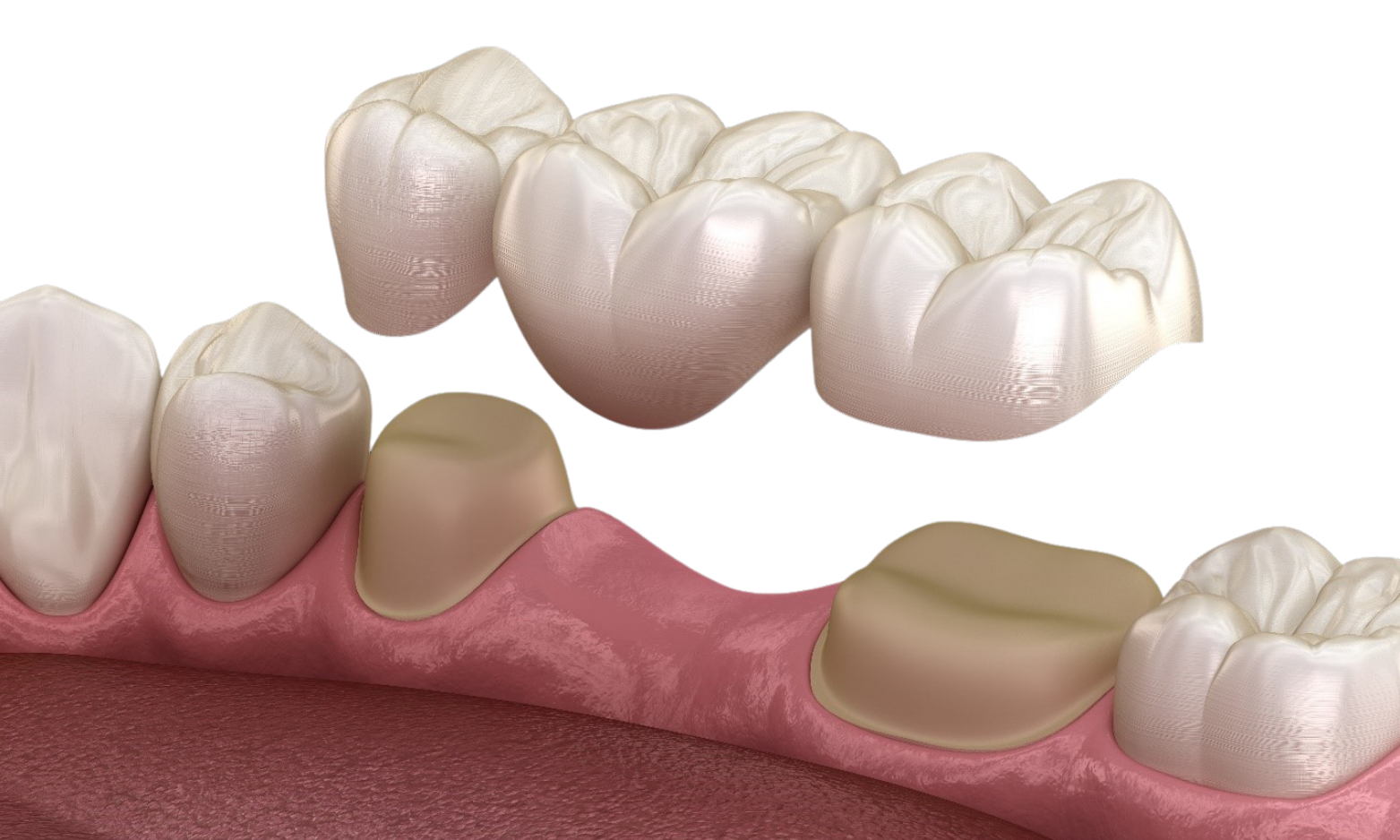
No matter how skillfully the dental bridge is made, it still “hangs” above the palate and this is visible — especially when reconstructing the front teeth. Implant restoration does not have such aesthetic shortcomings and looks closest to a natural smile – natural, harmonious and perfectly aligned with the rest of the teeth.
There are old and rather harsh jokes about the difficulties patients with dental bridges face when maintaining oral hygiene. Without going into them, we can confirm one thing — “hanging” constructions create a favorable environment for bacteria to develop, which leads to inflammation and infection. Sometimes, the bridge even needs to be removed and completely replaced with a new one. With implants, this risk is reduced to an absolute minimum.
Placing a dental bridge requires grinding down adjacent healthy teeth so that they can support the structure. Implant treatment, on the other hand, is entirely focused on restoring the lost tooth, without damaging the rest.
A bridge is not a tooth – it just looks like a tooth. The absence of a root over time leads to bone loss, retraction of the palate under the bridge, and ultimately – jaw deformity. This is a natural process that cannot be completely prevented. Therefore, good dentists always strive to preserve every tooth that can be saved, and when that is not possible, they recommend placing an implant, which perfectly and completely takes over the role of a natural tooth.