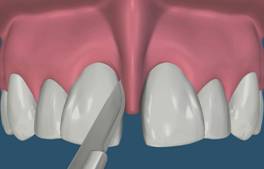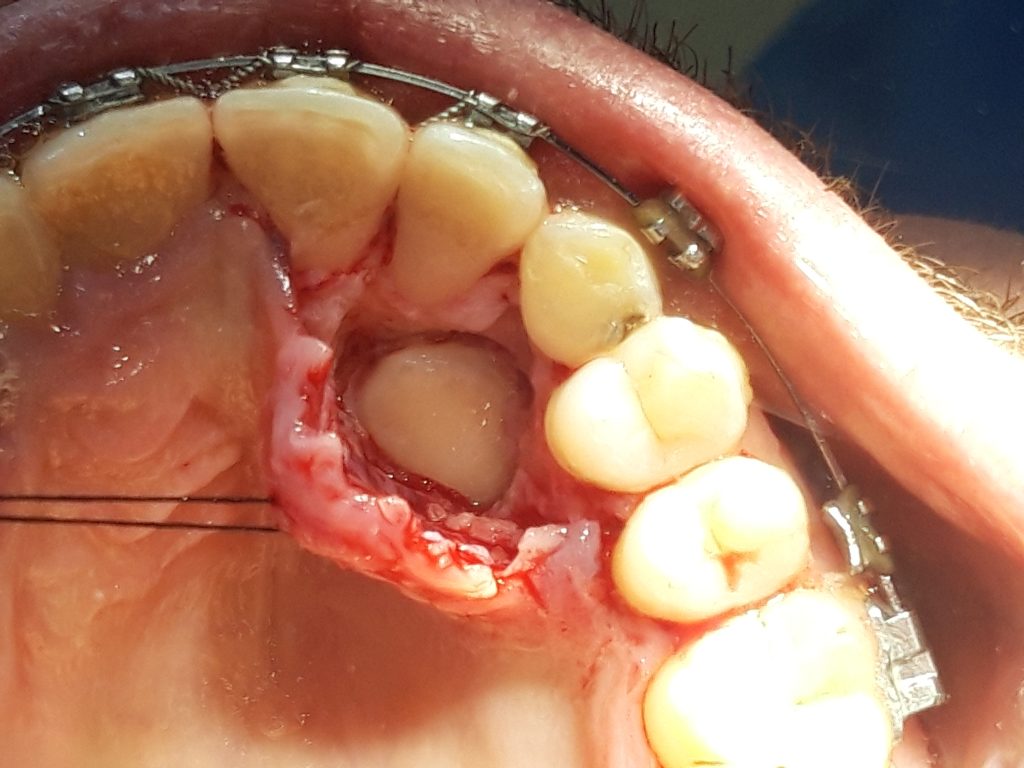

The primary goal is to accelerate orthodontic movement of impacted teeth by disrupting the dense cortical bone that offers resistance to tooth movement.
These incisions cause a localized bone remodeling process, known as RAP, which leads to increased bone metabolism and a transient decrease in bone density in the area.
This increased bone activity allows the affected tooth to move much faster under orthodontic forces than it would with conventional treatment.
Once the corticotomy is complete, the affected tooth is exposed, placed in brackets, and secured to orthodontic appliances.
The appliance is activated to move the tooth, often at two-week intervals, to take advantage of accelerated healing.
It is a specialized technique for difficult cases, such as teeth that are ankylosed (fused to the bone) or severely impacted, where conventional methods may be insufficient.
Corticotomy-assisted orthodontics can effectively treat more complex cases of malocclusion by providing increased acceleration of tooth movement.
The most significant benefit is the dramatic reduction in the time required for orthodontic tooth movement.
It allows for greater control and quality of tooth movement.
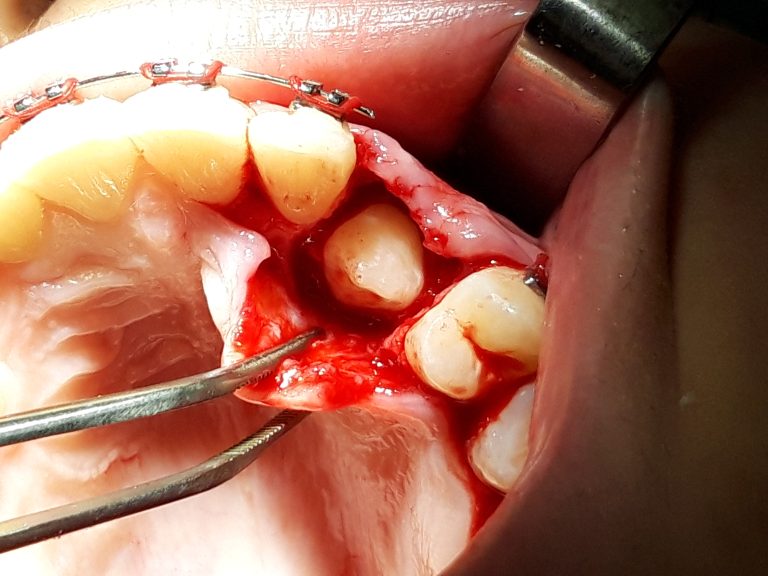
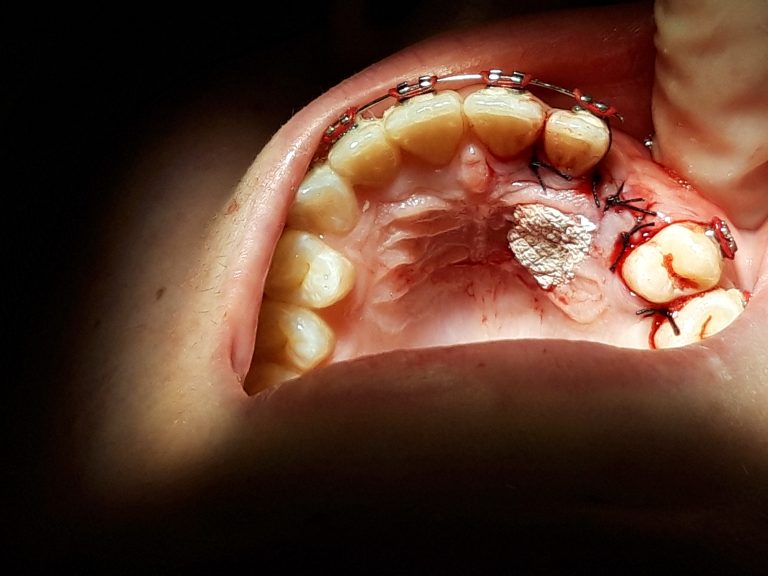
The technique can lead to improved tooth stability after completion of orthodontic treatment.
Rest with your head elevated when you arrive home after the procedure. Please limit your physical activity and movement to a minimum for the first 24 hours.
For the first 4-5 hours after surgery, we recommend placing an ice pack on your face at 20-minute intervals. This will help reduce facial swelling. If necessary, you can use an ice pack for 24 hours.
Please take anti-inflammatory medication (NSAIDs) to prevent inflammation, swelling, and pain. If you need NSAIDs, we recommend taking 400mg–800mg of ibuprofen every six hours to reduce swelling and pain and to promote healing. Do NOT exceed 2400mg in a 24-hour period. If you experience excessive pain or discomfort, take the prescribed narcotic. Please take it as directed, together with the NSAID. If you were prescribed an antibiotic, please take it as directed. Be sure to finish the full course. If any of the medications cause severe nausea, itching, or a rash, discontinue use and contact our office immediately.
In the next few days after surgery, slight oozing may occur, which is not a cause for concern. Gently rinse your mouth with cold water or cold chamomile or sage tea (these teas contain tannic acid, which can help stop bleeding). Please avoid smoking and alcohol, as these activities negatively affect blood clotting and the healing of the surgical site. If bleeding continues, apply pressure to the surgical area by biting down on moistened gauze for 20 minutes. If the bleeding is moderate to heavy and lasts for several hours without stopping, please contact our office immediately.
When you return home after surgery, you may have something very soft to eat or something cold to drink. On the evening of the surgery, we recommend that you eat a soft, bland meal, as this is usually the best way to feel better. During the first week, please do not eat anything hard or crunchy.
When possible, we will place a dressing over the surgical area to help keep you comfortable. Please DO NOT brush the areas covered with the dressing. If the dressing becomes loose or falls off and you still feel comfortable, continue avoiding brushing the surgical areas. If the surgical area feels uncomfortable without the dressing, please contact our office so we can place a new one. Please continue your regular oral hygiene routine on all other areas of your mouth. Use an antiseptic mouthwash at least once in the morning and once at night before bed until your next appointment at our office. You may also clean the dressed area by gently wiping it with cotton soaked in antiseptic mouthwash every morning, every night before bed, and after eating and drinking.