This type of damage most often occurs as a result of severe trauma - a blow or an accident. Up to a point, dentistry has the means to treat such cases. However, if the tooth or its root is severely damaged, it cannot be saved.
Periodontitis is an infectious disease that attacks the gum tissue around the teeth and subsequently – if left untreated – the bone. As a result, it begins to “melt” and the risk of tooth loss appears. To prevent the spread of infection and complete decalcification, the dentist may recommend extracting the problematic tooth and replacing it with a dental implant.
Persistent and recurrent granulomas, incurable cysts and other complications could also be a reason for forced extraction. In principle, inflammatory processes are treated medically, but sometimes even the most powerful antibiotic is not able to control them. Depending on your condition, the dentist will decide whether to try other treatments or to proceed with tooth extraction.
It happens that the wisdom teeth, which come into the world long after the other teeth, sprout incorrectly. In these cases, they begin to “push” the neighboring ones and their removal is advisable. Sometimes the wisdom teeth do not pierce at all, but with improper placement can exhibit painful symptoms and inflict identical lesions inside the bone. Again, wisdom teeth are most at risk for developing periodontitis because the area around them is the most inaccessible and does not allow for precise cleaning. In all these cases, the dentist will assess whether their extraction is necessary.
Sometimes the reason to lose a tooth is not damage, but purely orthodontic considerations – when it needs to be corrected with braces or dental aligners. If the teeth are too large, your dentist may recommend extracting one or more to open up space for the proper dental arch alignment.
It wouldn’t be fair if we tried to convince you how pleasant the tooth extraction procedure is. It’s not pleasant. But it’s not scary either, so there’s no reason to panic.
Here’s what to expect:
We will give you anesthesia in the area around the tooth so that you do not feel any pain during the procedure. Local anesthesia is more commonly used, which affects only the appropriate area.
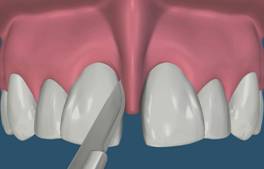
Before proceeding with the extraction itself, we will prepare the area around the tooth by separating the palate using a special instrument.
The actual procedure of extracting a tooth begins with shaking it. For this purpose, the dentist covers the tooth with forceps and performs successive careful but decisive movements of the tooth in both directions. It is his judgment when the shaking is enough and the tooth is ready for extraction.
With smooth movements and gentle wriggling, the tooth is removed from the bony alveolus. It is mandatory to check the site for remaining parts of the tooth and its roots.
After the final procedure, the dentist will disinfect the area to ensure a quick and safe healing. The walls of the wound will be cleaned precisely and the cavity will be pressed with gauze for a few minutes to close. In more serious cases, such as the removal of a retinated wisdom tooth, it is sometimes necessary to close the wound with several sutures.
In the first few days after the procedure, it is normal to have mild complaints, but we hasten to reassure you – there are no signs of complication or danger. You may have light bleeding that will subside quickly. Or feel mild to moderate pain that standard painkillers deal with quite successfully.
Rest with your head elevated when you arrive home after the procedure. Please limit your physical activity and movement to a minimum for the first 24 hours.
For the first 4-5 hours after surgery, we recommend placing an ice pack on your face at 20-minute intervals. This will help reduce facial swelling. If necessary, you can use an ice pack for 24 hours.
Please take anti-inflammatory medication (NSAIDs) to prevent inflammation, swelling, and pain. If you need NSAIDs, we recommend taking 400mg–800mg of ibuprofen every six hours to reduce swelling and pain and to promote healing. Do NOT exceed 2400mg in a 24-hour period. If you experience excessive pain or discomfort, take the prescribed narcotic. Please take it as directed, together with the NSAID. If you were prescribed an antibiotic, please take it as directed. Be sure to finish the full course. If any of the medications cause severe nausea, itching, or a rash, discontinue use and contact our office immediately.
In the next few days after surgery, slight oozing may occur, which is not a cause for concern. Gently rinse your mouth with cold water or cold chamomile or sage tea (these teas contain tannic acid, which can help stop bleeding). Please avoid smoking and alcohol, as these activities negatively affect blood clotting and the healing of the surgical site. If bleeding continues, apply pressure to the surgical area by biting down on moistened gauze for 20 minutes. If the bleeding is moderate to heavy and lasts for several hours without stopping, please contact our office immediately.
When you return home after surgery, you may have something very soft to eat or something cold to drink. On the evening of the surgery, we recommend that you eat a soft, bland meal, as this is usually the best way to feel better. During the first week, please do not eat anything hard or crunchy.
When possible, we will place a dressing over the surgical area to help keep you comfortable. Please DO NOT brush the areas covered with the dressing. If the dressing becomes loose or falls off and you still feel comfortable, continue avoiding brushing the surgical areas. If the surgical area feels uncomfortable without the dressing, please contact our office so we can place a new one. Please continue your regular oral hygiene routine on all other areas of your mouth. Use an antiseptic mouthwash at least once in the morning and once at night before bed until your next appointment at our office. You may also clean the dressed area by gently wiping it with cotton soaked in antiseptic mouthwash every morning, every night before bed, and after eating and drinking.


Extraction is not a simple procedure, especially in more complex cases. It requires proper assessment, precision, caution, experience, and decisiveness. At VITA DENT, we have a wealth of expertise and even richer experience to support all of this.
We know that losing a healthy tooth is too high a price for any patient. That is why our doctors will do everything possible to save even those teeth you may have already given up on.